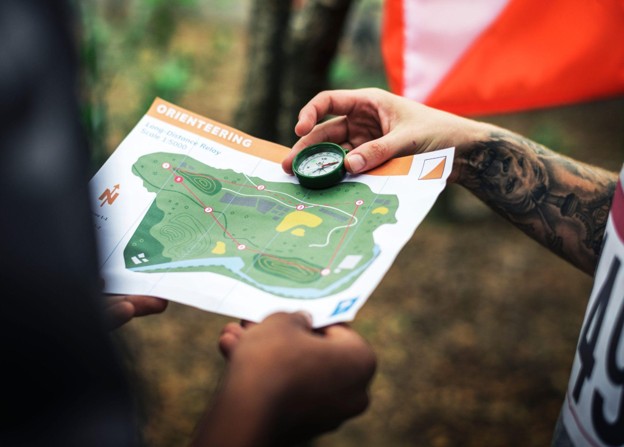
Developing confidence often comes from stepping into unfamiliar situations and learning to solve problems independently, and Jamil Brown Colorado Springs, recognizes that orienteering offers a unique opportunity to do exactly that. Combining outdoor exploration with map reading, navigation, and strategic thinking, orienteering encourages participants to rely on both their physical abilities and decision-making skills. Whether someone is new to outdoor recreation or looking for a fresh challenge, this activity provides valuable lessons that extend far beyond the trail.
Unlike many recreational activities that focus primarily on fitness, orienteering combines movement with problem-solving, making every outing an engaging learning experience.
Orienteering Combines Physical Activity With Critical Thinking
At its core, orienteering requires participants to navigate between designated checkpoints using a map and, in many cases, a compass.
This combination helps people develop:
- Route planning skills
- Spatial awareness
- Decision-making abilities
- Observation skills
- Physical endurance
Rather than simply following a marked trail, participants actively evaluate their surroundings and make informed choices throughout the journey.
This creates an experience that challenges both the body and the mind.
Navigation Skills Remain Valuable
Although digital navigation tools have become increasingly common, traditional navigation skills continue to offer important benefits.
Learning to read maps and understand terrain helps people:
- Build confidence in unfamiliar environments
- Develop greater independence
- Improve problem-solving abilities
- Better understand natural landscapes
- Prepare for outdoor adventures
Understanding basic navigation also encourages greater awareness of one’s surroundings instead of relying entirely on electronic devices.
These practical skills remain useful in many recreational settings.
Every Course Presents New Challenges
No two orienteering courses are exactly alike.
Participants may encounter:
- Forest trails
- Open fields
- Hills and valleys
- Streams
- Changing terrain
Each course requires careful observation and thoughtful planning.
Rather than repeating the same routine, every outing introduces different obstacles that encourage continuous learning and adaptation.
This variety keeps the activity engaging regardless of experience level.
Confidence Develops Through Experience
Successfully navigating a course provides a strong sense of accomplishment.
As participants gain experience, they become more comfortable:
- Reading maps accurately
- Making quick decisions
- Correcting mistakes
- Managing unexpected situations
- Trusting their own judgment
Confidence grows gradually through repeated practice, with each completed course reinforcing valuable skills that apply beyond outdoor recreation.
Learning to recover from small mistakes also becomes an important part of the process.
Orienteering Encourages Patience
Unlike activities where speed is the primary objective, orienteering rewards careful thinking.
Participants often benefit from taking time to:
- Study the map
- Evaluate multiple routes
- Observe landmarks
- Confirm directions
- Adjust plans when necessary
This thoughtful approach teaches patience while reinforcing the value of making informed decisions rather than rushing toward immediate results.
The ability to slow down often leads to greater success.
Outdoor Exploration Makes Learning Enjoyable
One reason many people enjoy orienteering is the opportunity to explore natural environments while developing practical skills.
Participants may experience:
- Scenic forests
- Local parks
- Nature preserves
- Mountain trails
- Open landscapes
Learning becomes more enjoyable when it takes place in dynamic outdoor settings rather than traditional classrooms.
Each course offers both educational value and opportunities to appreciate nature.
Families Can Learn Together
Orienteering is an activity that people of many ages can enjoy together.
Families often use it to:
- Encourage teamwork
- Build communication skills
- Solve problems collaboratively
- Spend quality time outdoors
- Develop confidence in younger participants
Working together on navigation challenges creates shared experiences while helping everyone strengthen practical skills in an enjoyable setting.
It also encourages healthy habits through regular outdoor activity.
Mistakes Become Valuable Lessons
Getting temporarily off course is a normal part of learning orienteering.
These moments teach participants to:
- Stay calm under pressure
- Reevaluate available information
- Identify alternative routes
- Learn from experience
- Continue moving forward confidently
Rather than viewing mistakes as failures, participants begin to recognize them as opportunities for improvement.
This mindset supports resilience in both recreational activities and everyday life.
Orienteering Builds Skills That Last
The lessons gained through orienteering extend well beyond completing individual courses.
Participants often strengthen:
- Critical thinking
- Adaptability
- Confidence
- Observation
- Self-reliance
These qualities prove valuable in many aspects of life, from personal goal setting to professional problem-solving.
The combination of physical activity and thoughtful decision-making creates benefits that continue long after the course has ended.
Final Thoughts
Orienteering offers much more than an enjoyable outdoor activity. It develops practical navigation skills, encourages thoughtful decision-making, builds confidence, and promotes lifelong learning through hands-on experience. By combining physical movement with strategic thinking, participants gain valuable abilities that support both personal growth and outdoor recreation.
Whether exploring a local park or navigating a more challenging course, orienteering reminds people that confidence is built one decision at a time. Every completed route strengthens not only navigation skills but also the ability to approach new challenges with curiosity, patience, and determination.